Over the past few years, my love of gardening has gradually blossomed into an appreciation for the pollinators that make our gardens possible. For a long time, I dreamed of creating a Minnesota pollinator garden that would provide food, shelter, and habitat for bees, butterflies, and other beneficial insects. This year, thanks to my Master Gardener internship through the University of Minnesota, that dream finally began to come to life.
Planning My Minnesota Pollinator Garden
As part of the program, I needed to complete an intern project that would make a positive impact on my local community. Every walk through the neighborhood reminded me how few places there were for bees and butterflies to stop along the way. This lack of pollinator-friendly spaces throughout my subdivision inspired me to create a space of my own. Pollinators quietly support much of the food we eat and the wildflowers we enjoy. And yet many struggle to find habitat as natural spaces disappear. Creating even a small patch of native plants can help make a difference.
From the beginning, I knew I wanted to focus primarily on native prairie perennials. Native plants are well-adapted to the local climate, making them relatively low-maintenance. Not only that, but native plants also provide valuable resources for local pollinators. Rather than designing a highly structured garden, I wanted the space to feel as though a small prairie had naturally appeared on the corner of our lot.
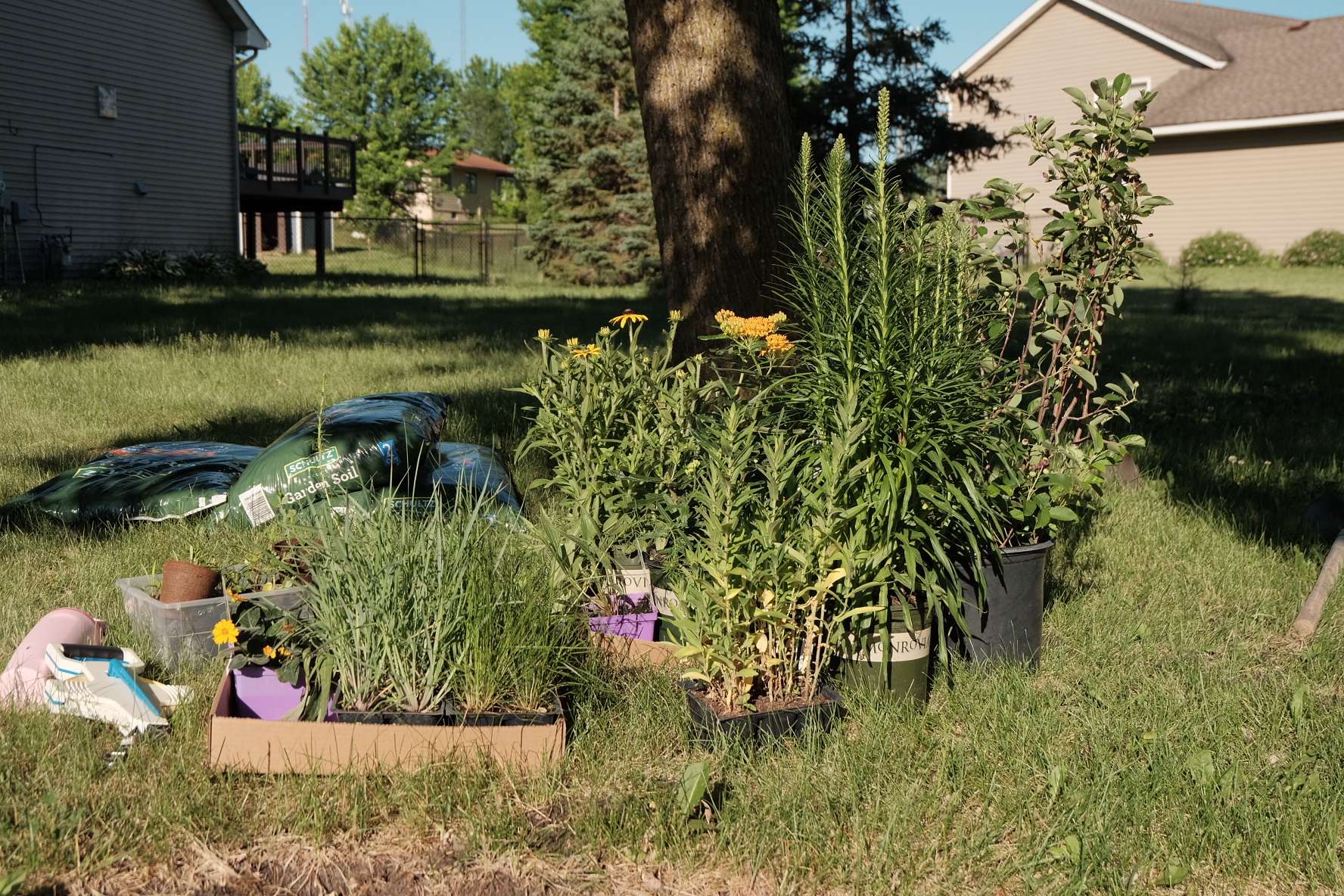
Using educational resources from the University of Minnesota and other Midwest extension programs, I carefully selected plants based on the available space in the garden bed, the plants’ mature sizes, the distance each plant needed from others, bloom time, wildlife value, and my overall budget. My goal was to create a garden that would provide blooms from early spring through late fall, offering pollinators a continuous buffet throughout the growing season while also providing habitat and shelter throughout all of the seasons.
Discovering the Perfect Spot
Because my front yard is fairly large, choosing the location took more thought than I expected. I wanted the garden to be visible from the road without creating visibility concerns, receive enough sunlight despite the mature trees overhead, and follow the natural curve of the lawn so it looked like it had always belonged there.
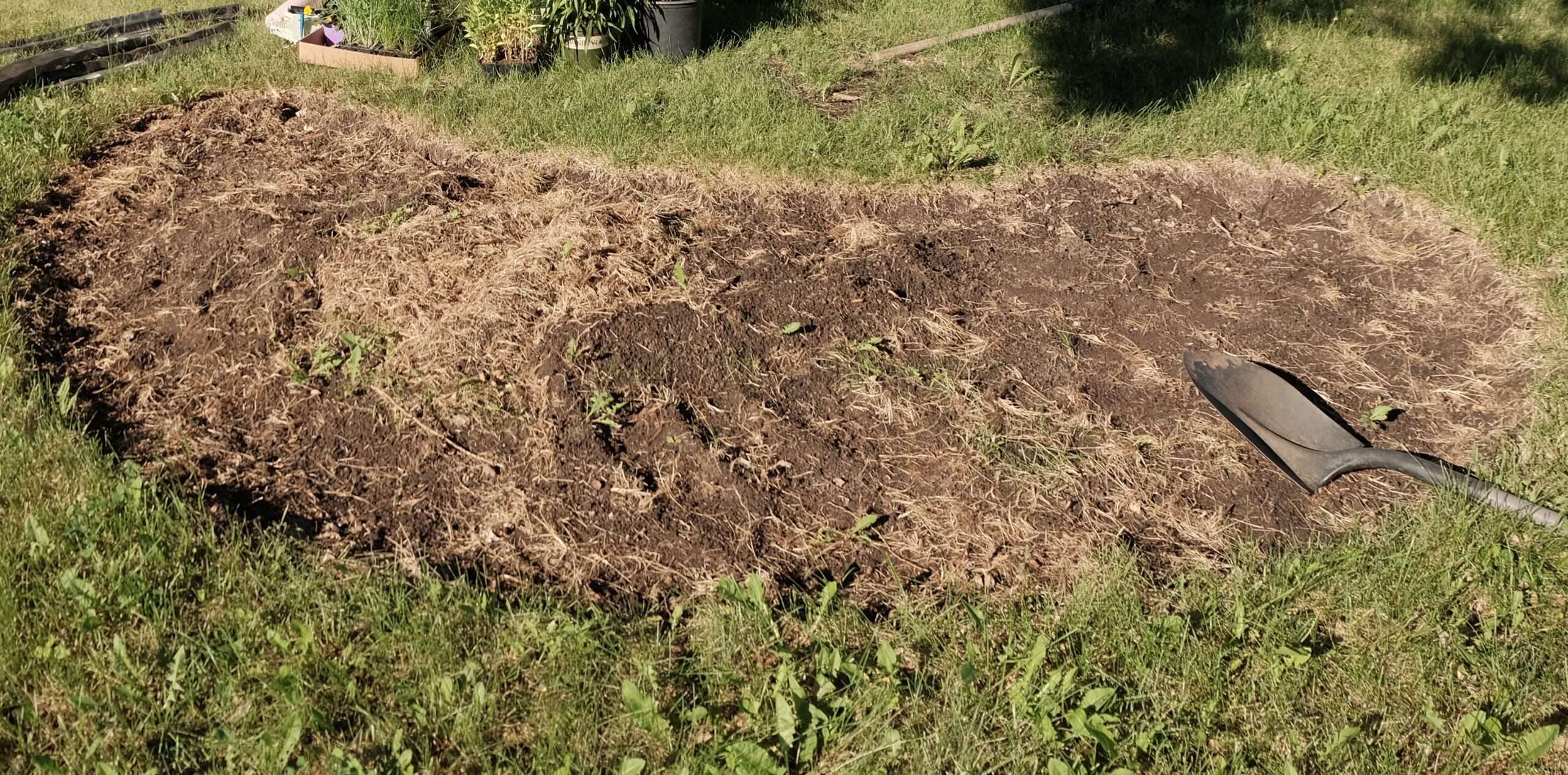
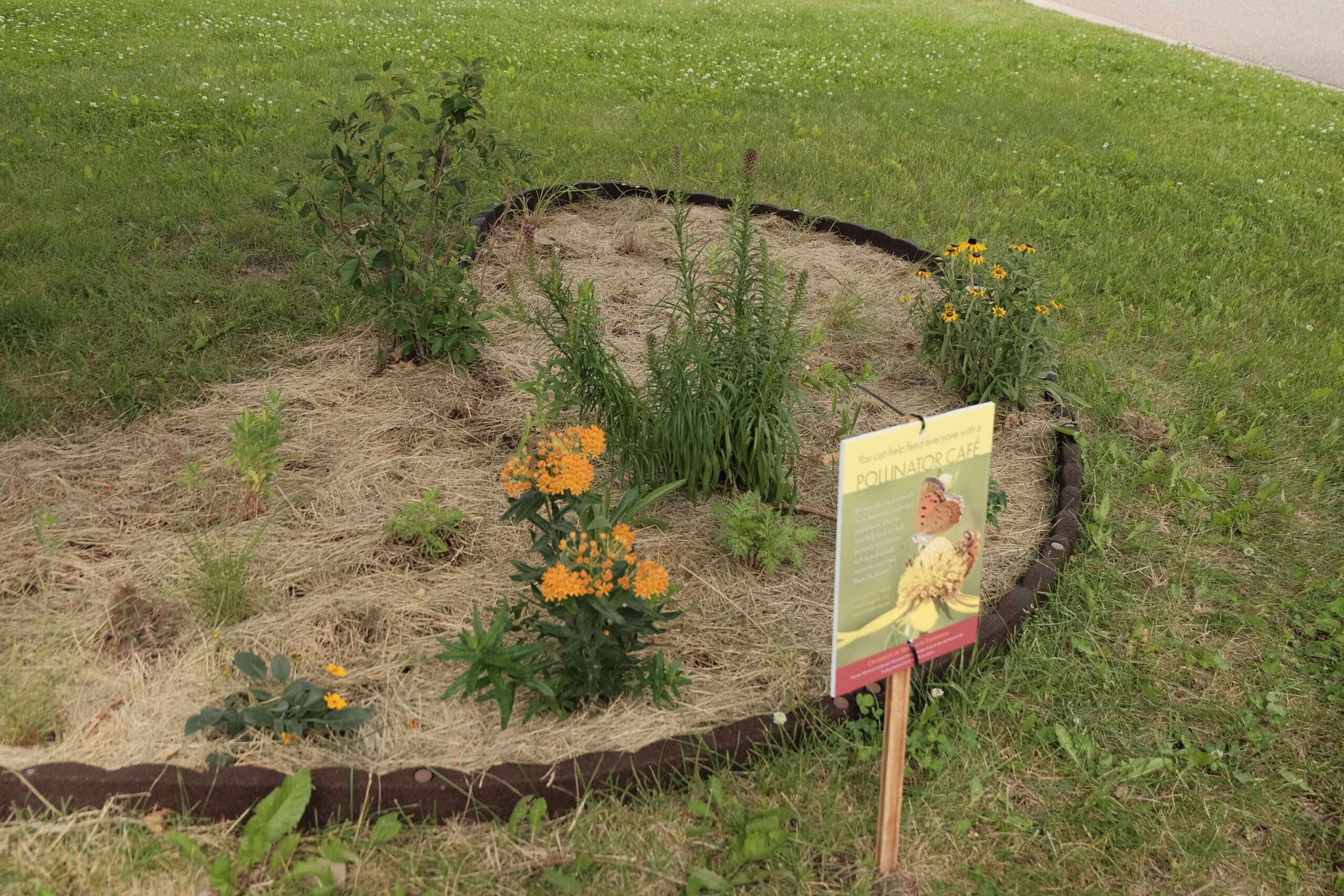
I ended up designing a crescent moon bed that followed the curve of the corner of my lot while also being far enough back from the road to avoid causing visibility issues once the plants are fully grown. This spot is also located under some branches that create a wonderful dappled shade for the first half of the day while providing full sun for the second half. Not only does the garden bed follow the curve of the curb, but the interior part of the moon curves around the tree shading the plants, giving me the perfect spot to place a bench where I can sit and observe my pollinator friends in action.
Choosing Native Plants for My Minnesota Pollinator Garden
With the location finalized, the next challenge was deciding which plants would call this little prairie home. Every species needed to tolerate partial sun, roadside salt, and the harsh winters while also complementing the other plants in size, bloom time, and habitat value. The garden also needed to provide nectar from spring through fall while creating a space where pollinators could feed, shelter, and overwinter.
I used the University of Minnesota Extension’s Plant Elements of Design resource to narrow down my selections and create a planting plan. I also made a list of backup species in case I couldn’t find everything at my local nursery—a decision that proved worthwhile when a few of my first choices weren’t available.
Planting Day
Once my utility lines were marked, it was finally time to break ground. I pulled out the cultivator and got to work preparing the bed. After loosening the soil, I raked everything smooth and laid down sheets of cardboard as a biodegradable weed barrier.
Of course, nature had other plans. It was one of the windiest days we’d had in weeks, and the cardboard repeatedly threatened to blow across the street. We ended up weighing each piece down with whatever we could find until we were ready for the next step. We also discovered we’d come up a little short on landscape edging, so we decided to finish the back edge another day.
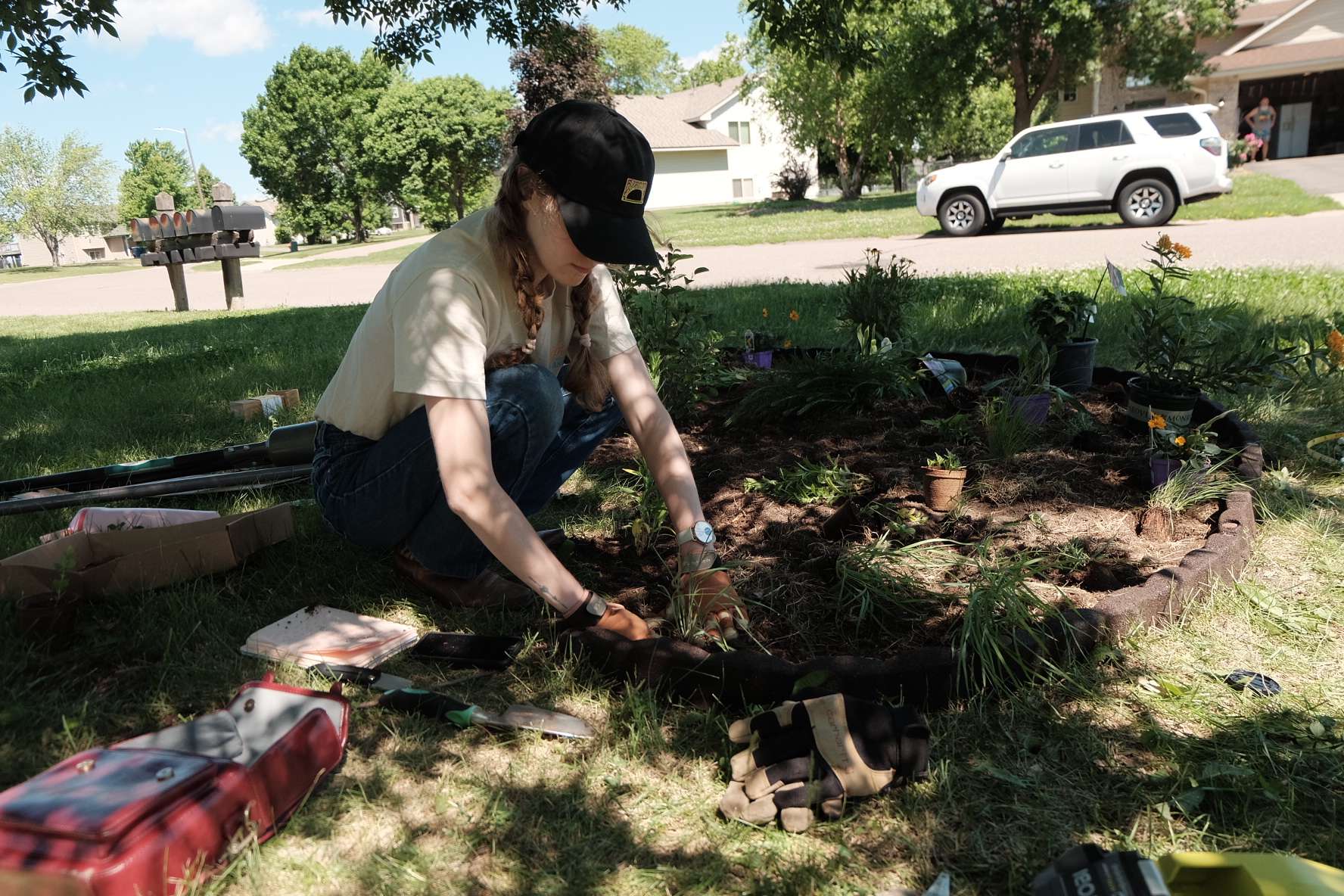
Next, I mixed the loosened topsoil with compost and garden soil in a wheelbarrow—one of my toddler’s favorite jobs to help with. Once the soil was ready, I measured the spacing for each plant, cut planting holes through the cardboard, and spread the soil mixture evenly across the bed. Seeing the empty bed slowly transform into a prairie planting made weeks of planning feel suddenly real. Finally, it was time to put every plant into its new home.
🌿 Plants Included
Little bluestem
Prairie dropseed
Prairie clover
Regent serviceberry
New England asters
Pale purple coneflowers
Butterfly weed
Bee balm
Coreopsis
Liatris
Black-eyed Susans
Cosmos
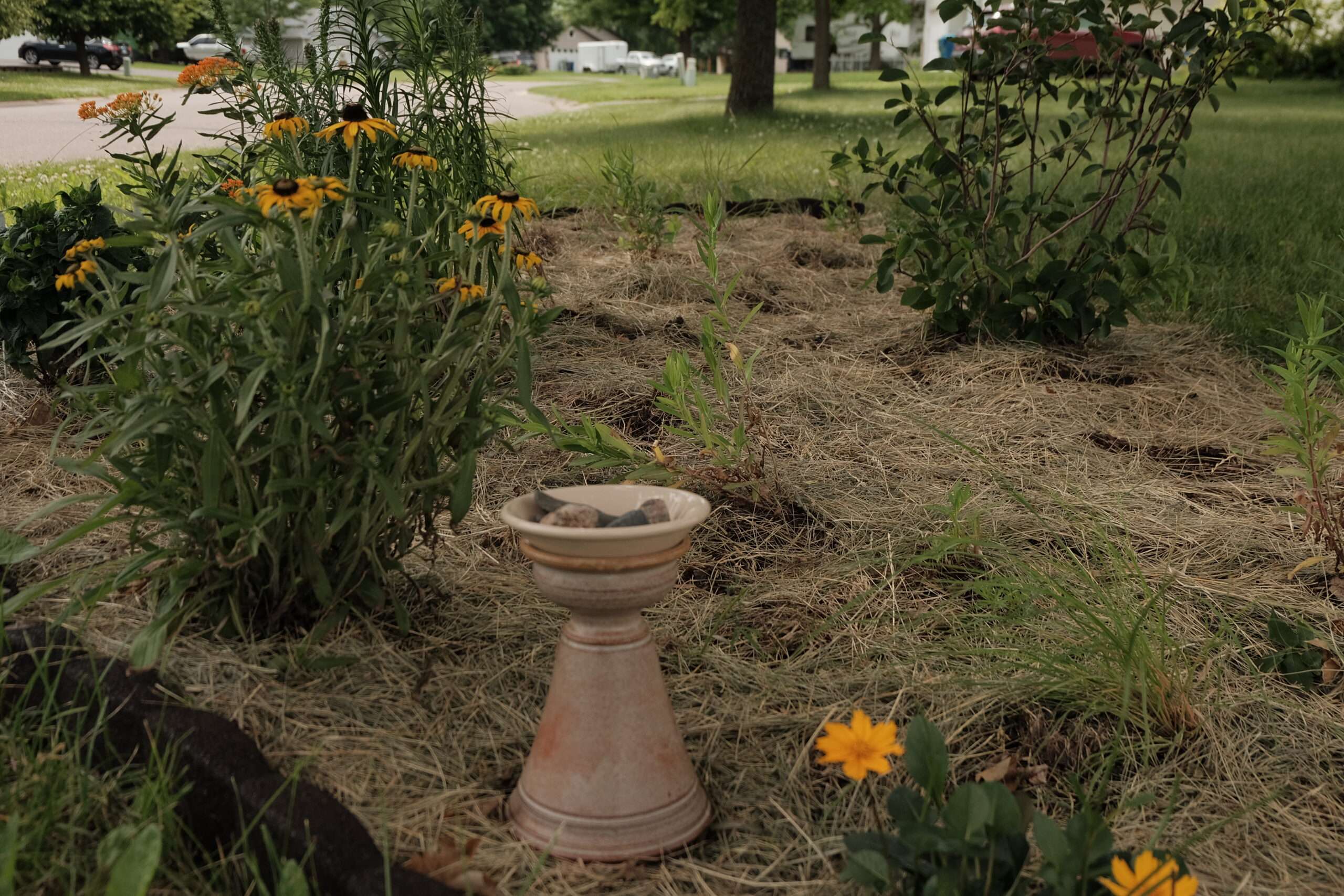
To make the space even more welcoming, I created a simple bee watering station using a candle stand, a shallow dish, and small stones gathered from around our yard. The bed was mulched with grass clippings, but I intentionally left a few patches of bare soil for ground-nesting bees and other beneficial insects.
🌿 Garden Note
I expected it to take weeks before wildlife discovered the garden. Instead, bees began visiting within days of planting—a reminder that even a young garden can begin making a difference.
Early Results
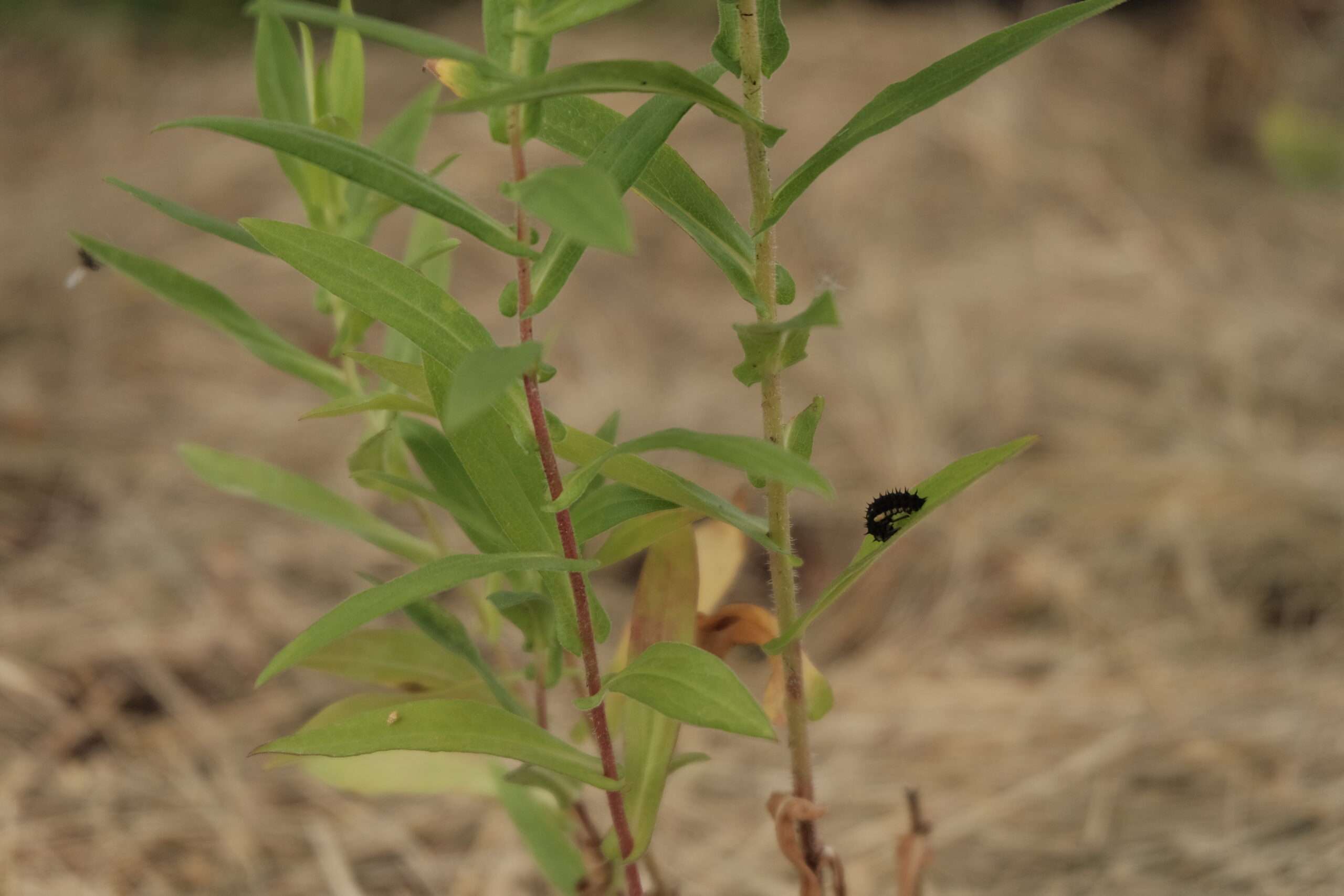
While this little prairie is still in its infancy, it is already attracting visitors. I’ve spotted bees investigating blossoms through the garden, offering glimpses of what this space may become in the years ahead.
Not everything is blooming quite yet, and I’m patiently waiting for my liatris and bee balm to show off their purple blossoms. Some of my asters, prairie clover, and serviceberry have already attracted plenty of attention—not just from pollinators, but from the local wildlife as well. Birds quickly discovered the berries, while rabbits sampled a few tender stems before I realized just how appealing my new garden would be.
As soon as I can find the right one, I am going to place a small bench just behind this prairie paradise where I can sit with a book and a cup of coffee, quietly observing the comings and goings of my wild neighbors. For now, I look forward to watching this prairie grow, thrive, and—hopefully—inspire others in my community to create spaces for pollinators as well. After all, even the smallest patch of prairie can become a refuge—not only for bees and butterflies, but for the people who pause long enough to enjoy them.