My Experience Harvesting, Drying, & Brewing Linden Tea
Discovering Linden Tea
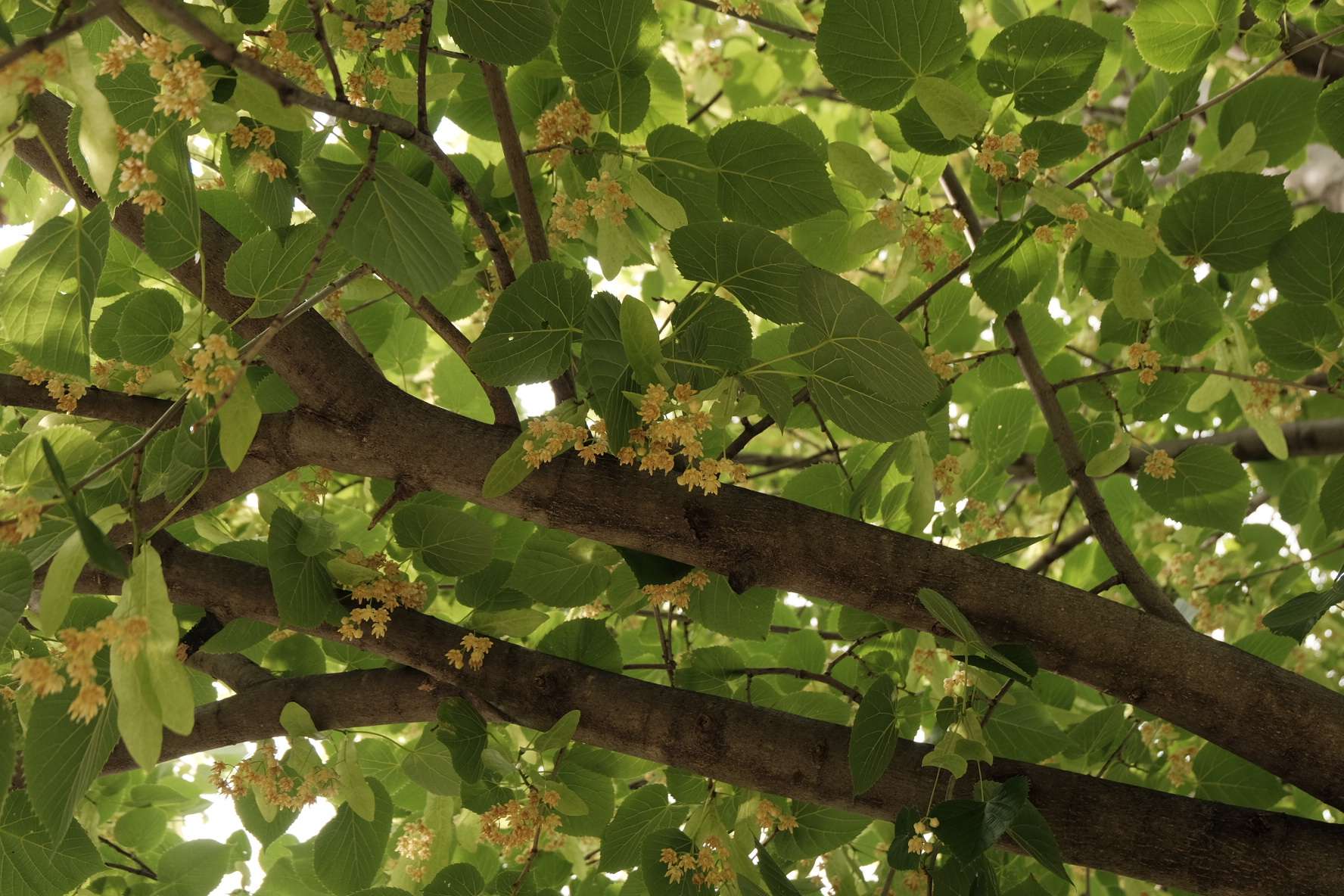
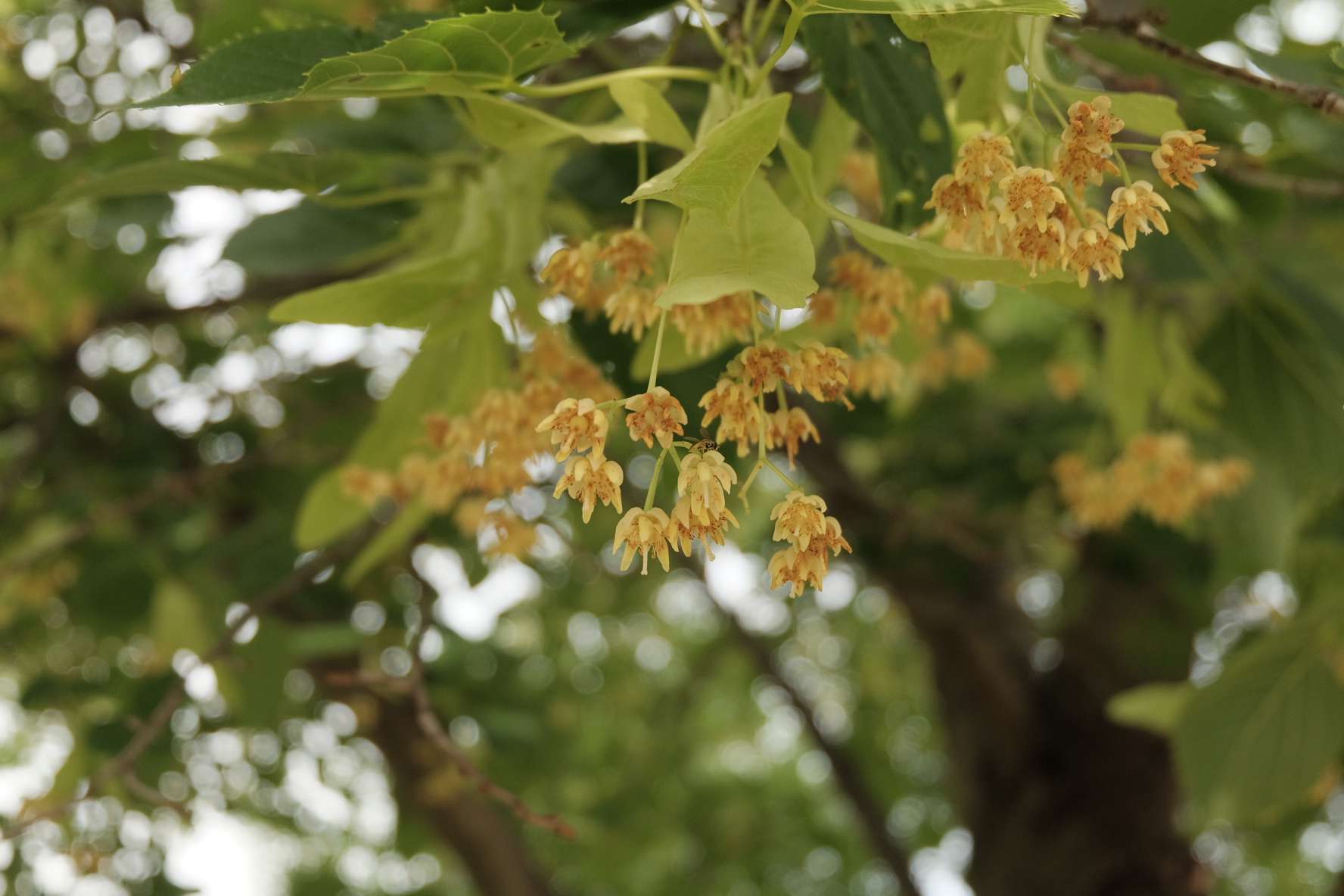
As I’ve continued to learn about plants in general, I’ve wanted to dive deeper into what plants I have on my property and what I can use them for. I recently discovered that one of the trees in my front yard is a linden tree. When the tree came into bloom I started researching if there was anything I could do with these delightfully sweet-smelling flowers. I was overjoyed to learn that I could use them to make tea. After learning that, I rushed to grab my basket to harvest my very first batch of linden tree tea.
🌿 Foraging Thoughtfully
One of the joys of learning about the plants around us is taking the time to know them well. Always positively identify a plant before harvesting it for food or tea, and only gather from areas that haven’t been treated with pesticides or other chemicals.
The Harvesting Experience
I harvested the blossoms and their pale leaf bract companions on a cool summer morning after the dew had evaporated. The wind was gentle against my skin and it was soothing to listen to the leaves rustle. While picking off the blossoms, I was soon greeted by a soft buzzing nearby. A big, fluffy bumble bee was there enjoying these sweet little flowers alongside me. As the bumble bee drifted between flower clusters, I was also greeted by several other native bees and a fly.
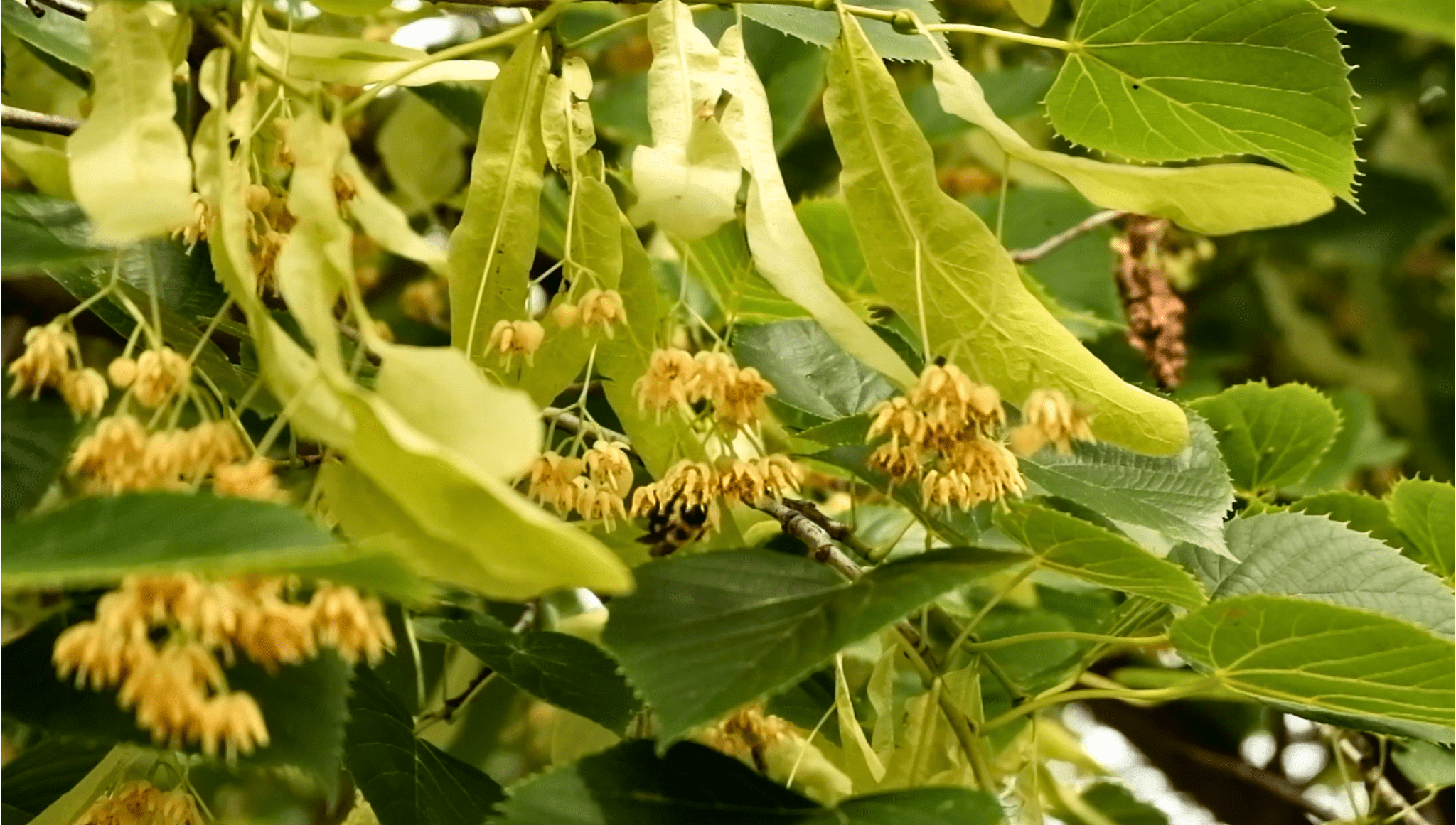
One of my favorite parts of the experience was the smell of the linden blossoms. The flowers have a soft, sweet fragrance. Almost a perfect blend between floral and honey. The fragrance wafted down from the tree to greet me as I picked my bounty. After finishing my harvest, I enjoyed the breeze and the smells. Each and every sensation made me even more excited for that future cup of tea.
🌿 Nature Note
Linden trees are often called the “bee tree” because their fragrant blossoms provide an abundant source of nectar for bumble bees, native bees, butterflies, and many other beneficial insects during early summer. If you’d like to learn more about why these beautiful trees are so valuable to pollinators, Penn State Extension has an excellent article on the ecology of American linden trees.
Drying My Linden Tea Blossoms
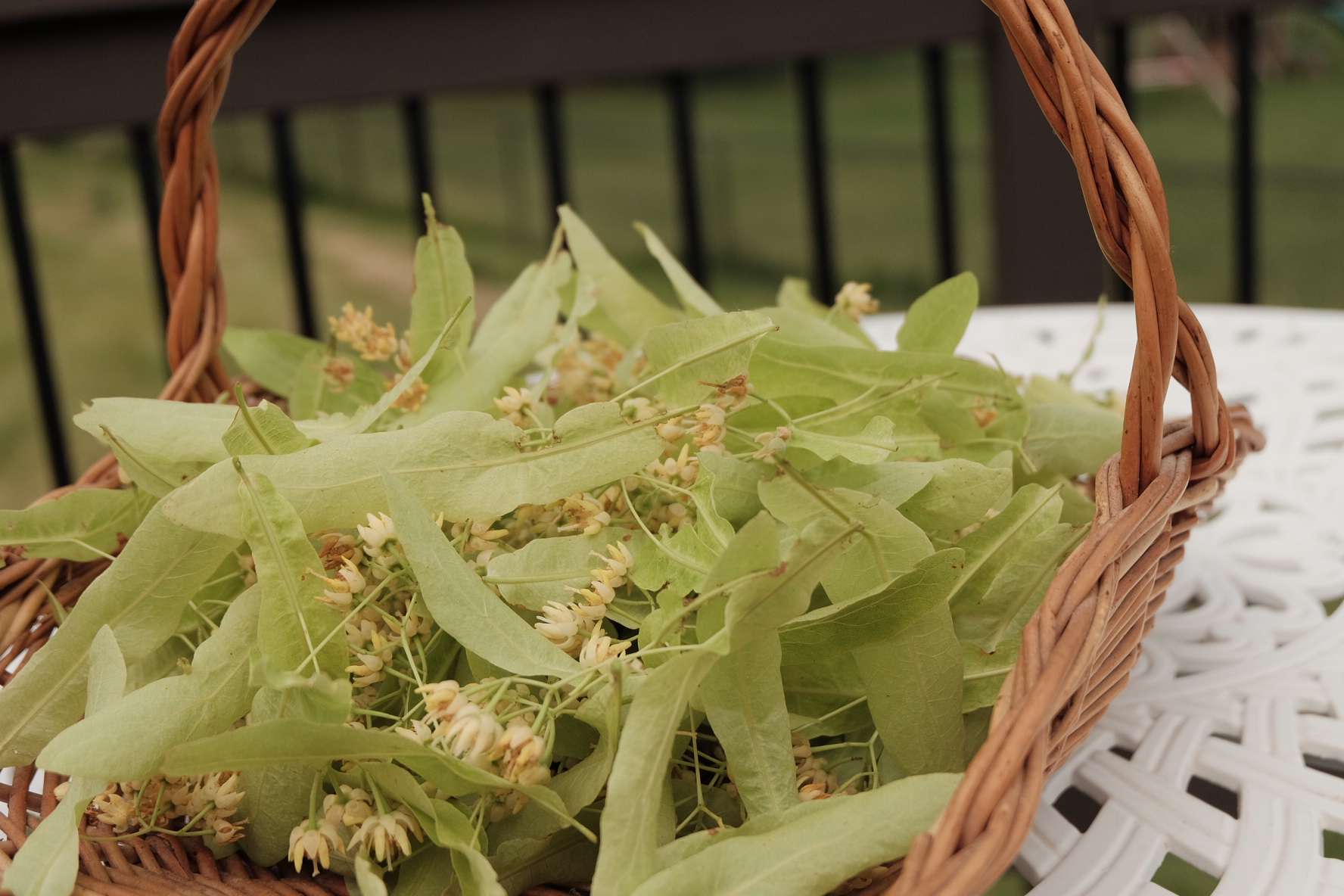
Once my basket and my heart were full with the joy from the harvest, I took the basket inside to start the drying process. I’m currently using a thrifted wire tray to dry my herbs, and it works perfectly! I set my linden flowers and bracts out on my table to dry. After two days, the flowers and bracts had dried and were ready for storage.
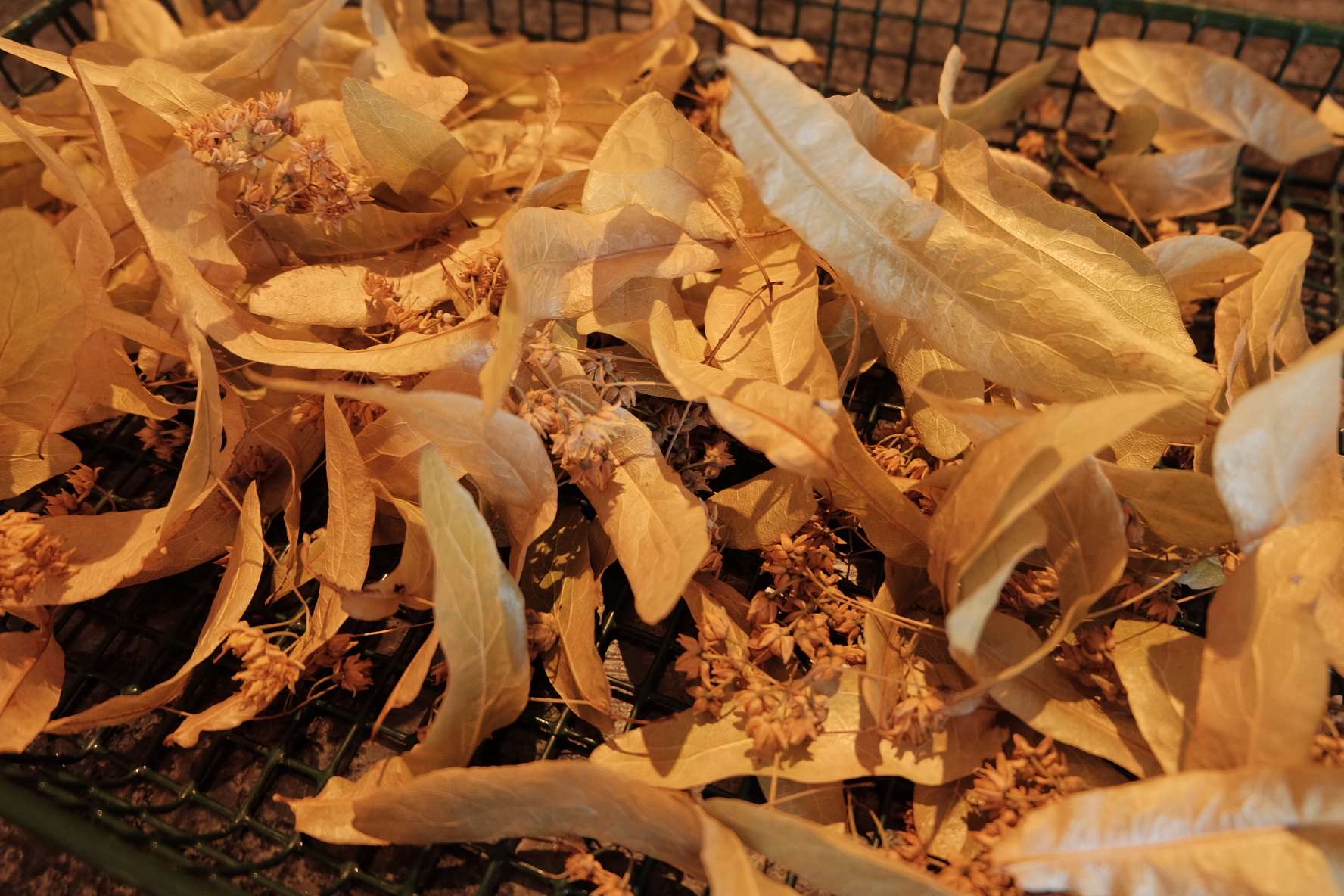
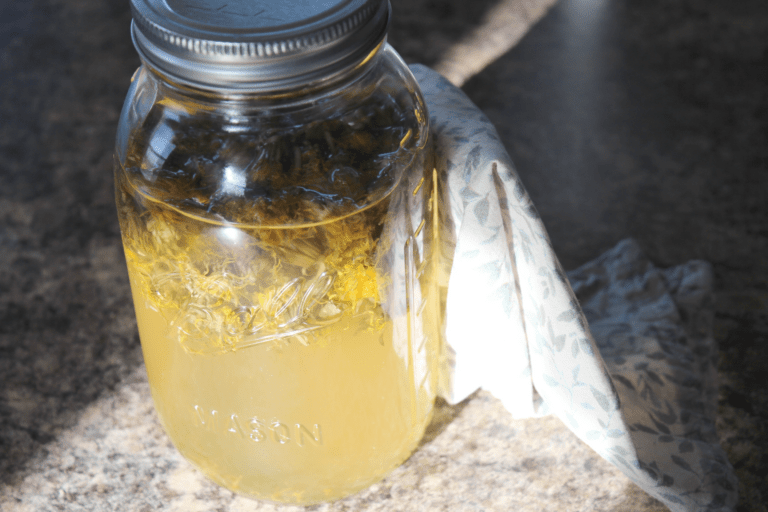
I used my mortar and pestle to crush up part of my linden blossom harvest to make an immediate batch of tea. The rest I put in my blender. I patiently waited for about 15 minutes for my cup to steep fully so I could embrace the flavors as much as possible. The result was a golden cup of tea with a bit of honey swirled in to taste.
My Golden Cup of Linden Tea
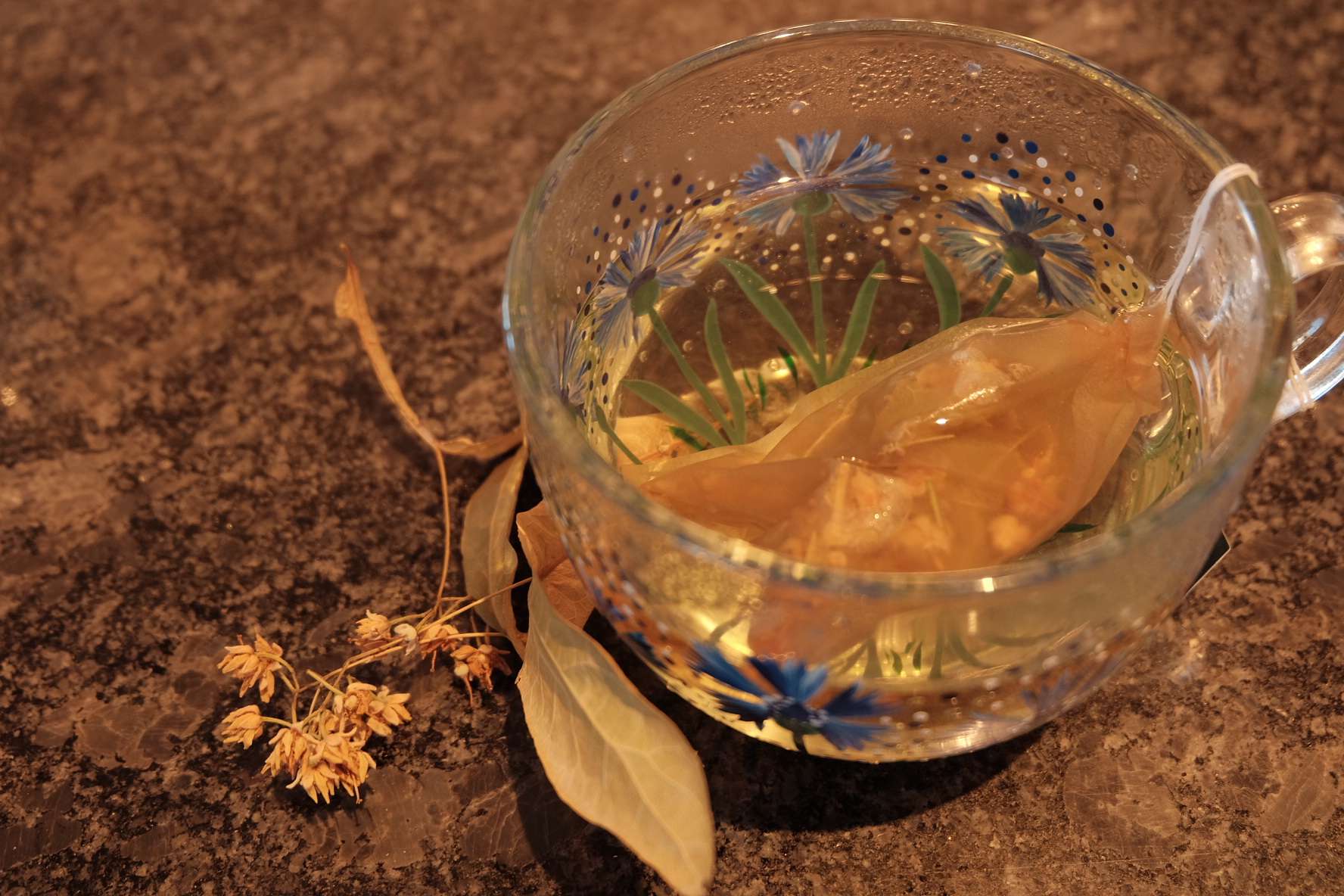
The subtly sweet, soft floral tea brought me back to the joy I felt while harvesting these little blossoms. It felt like drinking a cup of sunshine. I shared this joy with both my husband and toddler. And while they didn’t get to enjoy the initial harvest, they did get to reap the bountiful rewards.
I am happy to say that linden tea is now going to become one of my favorite summer harvests to enjoy, and I’m going to harvest a second batch so we can continue to enjoy this cup of sunshine during the dreary winter months and reminisce about the early summer days. Until then, I’ll happily keep sipping these little cups of sunshine while dreaming up new ways to enjoy my summer harvest.
Linden Tea Questions
Can you make tea from linden blossoms?
Yes, linden flowers and their bracts can be dried and brewed into a naturally sweet herbal tea.
When is the best time to harvest linden blossoms?
Linden blossoms are best harvested when flowers are open and fragrant, typically in early summer.
📌 Save this post for later
Planning your own summer linden harvest? Save this guide to Pinterest so you can come back to it when your linden tree begins to bloom.